
- Written By: admin
As autumn turns into winter, the days become shorter, businesses operate for longer periods in darkness, and buildings rely increasingly on artificial lighting.
While emergency lighting is essential throughout the year, the darker months are a particularly good time for businesses and property managers to ask an important question:
If the power suddenly failed, would everyone inside your building be able to find their way out safely?
At Safe & Sound Fire Ltd, we help businesses protect their premises, employees and visitors with professional fire safety solutions, including emergency lighting installation, testing and maintenance.
Here’s why emergency lighting deserves particular attention as we head into the darker months.
What Is Emergency Lighting?
Emergency lighting is designed to provide illumination when the normal lighting within a building fails.
If there is a power cut, electrical fault, fire or other emergency, the building could suddenly be left without its usual lighting. Emergency lighting provides an alternative source of illumination to help people safely navigate the premises and find an escape route.
Depending on the building, emergency lighting may be required around areas such as:
- Corridors and escape routes
- Staircases
- Changes in floor level
- Exit doors
- Fire-fighting equipment
- Fire alarm call points
- Larger open areas
- Areas where sudden darkness could create additional danger
The purpose isn’t simply to provide some light. It is to help people leave a building safely during an emergency.
Why Do the Darker Months Matter?
Imagine a lighting failure during a bright summer afternoon. Depending on the building, some natural daylight may still enter through windows and doors.
Now imagine the same situation at 5pm on a dark winter evening.
The difference can be significant.
During autumn and winter, many employees arrive at work or leave after sunset. Shops, offices, warehouses, hospitality venues and other commercial premises can also remain occupied for hours after natural daylight has disappeared.
If the normal lighting fails during these periods, some areas of a building could become extremely dark almost instantly.
That’s when properly functioning emergency lighting becomes critical.
Could People Find the Exit in Complete Darkness?
We become familiar with buildings we use regularly, but an emergency can completely change how people react.
Smoke, alarms, loss of power and panic can make even a familiar environment more difficult to navigate.
Visitors, customers and contractors may also have little knowledge of the building layout.
Emergency lighting can help make escape routes clearer, allowing occupants to identify where they need to go rather than attempting to navigate corridors, stairs and exits in darkness.
This can be particularly important in larger or more complex premises.
Emergency Lighting and Fire Safety Work Together
Emergency lighting should be considered as part of the wider fire safety arrangements within a building.
A fire alarm alerts occupants that something is wrong.
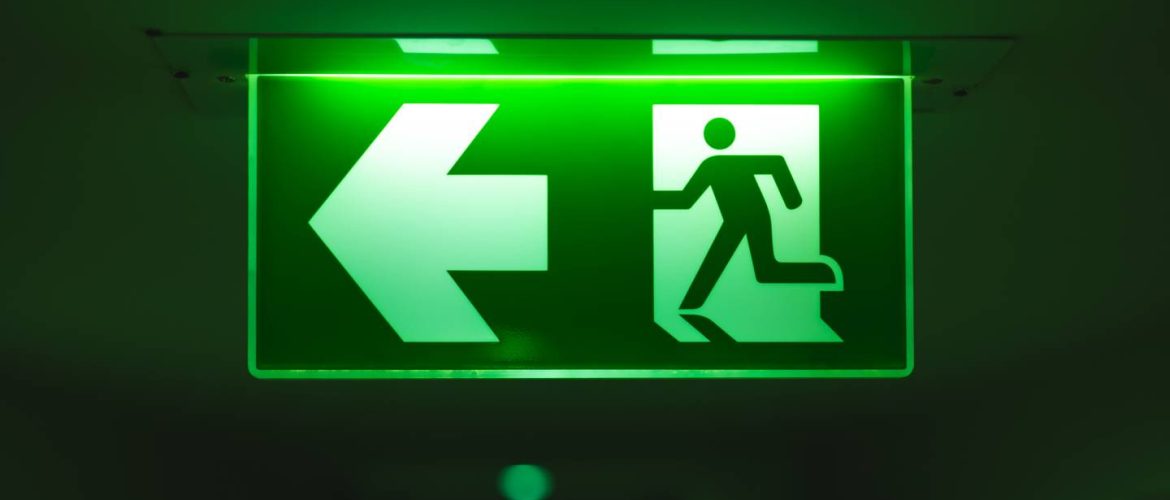
Fire safety signage helps indicate escape routes and exits.
Emergency lighting helps ensure those routes remain visible if the normal lighting fails.
These systems all have different functions, but together they contribute towards creating a safer evacuation process.
That’s why businesses shouldn’t look at emergency lighting as an isolated piece of equipment. It forms part of a wider approach to fire safety and emergency preparedness.
When Was Your Emergency Lighting Last Tested?
Having emergency lights installed isn’t enough. Businesses need confidence that they will actually operate when required.
Like other safety equipment, emergency lighting systems require appropriate inspection, testing and maintenance.
A light fitting may look perfectly normal during everyday operation, but that doesn’t necessarily tell you whether it will perform correctly during a loss of mains power.
Regular checks can help identify problems such as:
- Failed lamps or fittings
- Battery issues
- Damage to emergency lights
- Inadequate illumination
- Changes to a building layout affecting escape routes
- Equipment requiring repair or replacement
Discovering these problems during a planned inspection is far better than discovering them during an actual emergency.
Have You Changed the Layout of Your Premises?
Businesses change over time.
An office may be refurbished. A warehouse might introduce new racking. A restaurant could change its seating layout. A commercial unit might be divided into different working areas.
When a building changes, its fire safety arrangements may also need reviewing.
Something that was appropriate for the previous layout might not necessarily suit the new one.
If you’ve recently refurbished, extended or significantly altered your premises, it makes sense to consider whether your emergency lighting, fire alarm system and fire safety signage remain appropriate.
Don’t Forget Staircases and Changes in Level
Losing normal lighting can create additional hazards beyond simply making it difficult to locate an exit.
Stairs, steps and changes in floor level can become much harder to identify in darkness.
During an evacuation, people may also be moving more quickly than usual or following other occupants towards an exit.
Suitable emergency illumination can help people see these potential hazards as they make their way along an escape route.
Emergency Lighting for Commercial Premises
Different premises have different layouts, occupancy levels and fire safety requirements.
Emergency lighting may be relevant across a wide range of environments, including:
Offices – particularly corridors, staircases and internal areas with limited natural light.
Warehouses and industrial premises – where large spaces, machinery, racking and complex layouts can make evacuation more challenging.
Retail premises – where customers may be unfamiliar with the location of exits.
Hospitality venues – particularly where premises remain occupied well into the evening.
Communal areas – where multiple occupants may rely on shared escape routes.
The appropriate emergency lighting arrangement should be considered in relation to the individual premises rather than assuming the same solution works everywhere.
Darker Evenings Are a Good Reminder to Review Your Fire Safety
October and the start of the darker months provide businesses with a useful reminder to look at their wider fire safety arrangements.
Ask yourself:
When was our fire alarm last serviced?
Has our emergency lighting been properly checked?
Are escape routes clearly identified?
Is our fire safety signage visible and appropriate?
Is our fire safety equipment maintained and ready to use?
If you’re unsure about any of those questions, now is a sensible time to get things checked.
Don’t Wait for an Emergency to Find Out Something Doesn’t Work
Emergency lighting is one of those systems you hope you’ll never need.
But if you do need it, it needs to work.
Waiting until a power failure or emergency evacuation to discover a problem could put people at unnecessary risk.
Regular testing and professional maintenance can provide reassurance that your emergency lighting system is ready to perform when required.
Emergency Lighting Services from Safe & Sound Fire Ltd
At Safe & Sound Fire Ltd, we help businesses maintain safer premises with professional fire safety services across Glasgow, Edinburgh and surrounding areas.
Our services include support with:
🔥 Fire alarm systems
💡 Emergency lighting
🧯 Fire extinguishers
🚨 Fire safety equipment
📋 Fire safety signage
🔒 Access control and security solutions
Whether you need an existing emergency lighting system checked or you’re reviewing the fire safety arrangements across your premises, our team can help.
Is Your Emergency Lighting Ready for the Darker Months?
As daylight hours become shorter, make sure your business isn’t left in the dark when it matters most.
Get in touch with Safe & Sound Fire Ltd today to discuss emergency lighting testing, maintenance or installation and ensure your premises are prepared for the months ahead.
© 2026 Safe & Sound Fire Limited. All Rights Reserved. Website Design by Vision51
